Pre-filled pens compared with vials and bacteriostatic water
The difference between a pre-filled pen and a vial is not convenience. It is where measurement error lives, and how often the material meets open air.
ReadyPep Research Desk5 min read
The comparison between a pre-filled pen and a vial with bacteriostatic water is usually framed as convenience against cost. That framing misses what actually differs between them, which is where uncertainty accumulates.
The vial workflow, step by step
Reconstituting by hand involves a sequence of independent operations, each of which introduces a small error.
Diluent is drawn into a syringe and added to the lyophilised cake. The volume drawn is read off a graduation by eye. The vial is assumed to contain the amount printed on the label. The resulting solution is assumed to be uniform. Aliquots are then drawn, again read off a graduation by eye. Some volume remains in the needle and hub each time and is discarded.
Every one of those steps is reasonable. The issue is that the errors are independent, so they do not cancel. They compound, and the compounded figure is invisible because nothing in the workflow measures it.
The label assumption is the one that surprises people, and it connects directly to the purity and content distinction on a certificate of analysis. If the container holds less peptide than stated, then every subsequent calculation inherits that discrepancy, no matter how carefully the volumes are handled.
What a pre-filled format changes
A pre-filled pen does not eliminate these problems. It moves them somewhere they can be measured.

Reconstitution happens once, under controlled conditions, with the diluent volume dispensed by equipment rather than read by eye, and with the result verified before the unit is sealed. The uncertainty that lived at the bench now lives in a process with a record attached.
The dial then handles division. Dividing a known quantity by a mechanical detent is a more repeatable operation than drawing to a graduation line, largely because it removes the human visual judgement that was the largest contributor to variance.
The second change is exposure count. A vial workflow entails one entry to reconstitute and one entry per aliquot thereafter. Fifteen aliquots means sixteen entries, each admitting non-sterile air and disturbing the solution mechanically. A sealed pen is entered once during manufacture.
Where the two formats actually differ
The differences are real, and they are differences in where the work happens rather than in whether it gets done.
A pre-filled unit is set at manufacture. A vial is made up at the bench, which is why vial workflows persist wherever a protocol defines its own concentration series.
A pre-filled unit arrives in solution, so it enters the reconstituted storage regime when it is made rather than when it is opened. Lyophilised material stays dry until someone adds water to it, and dry material is the more patient of the two.
Set against that, everything a vial defers to the bench still has to be done by somebody. The measurement, the sterility discipline and the diluent provenance do not disappear in a vial workflow. They move to a person, working by hand, usually without a record. In a pre-filled workflow the same three things are handled once, under process control, and written down.
The part that is genuinely about lot integrity
There is one difference that has nothing to do with handling.
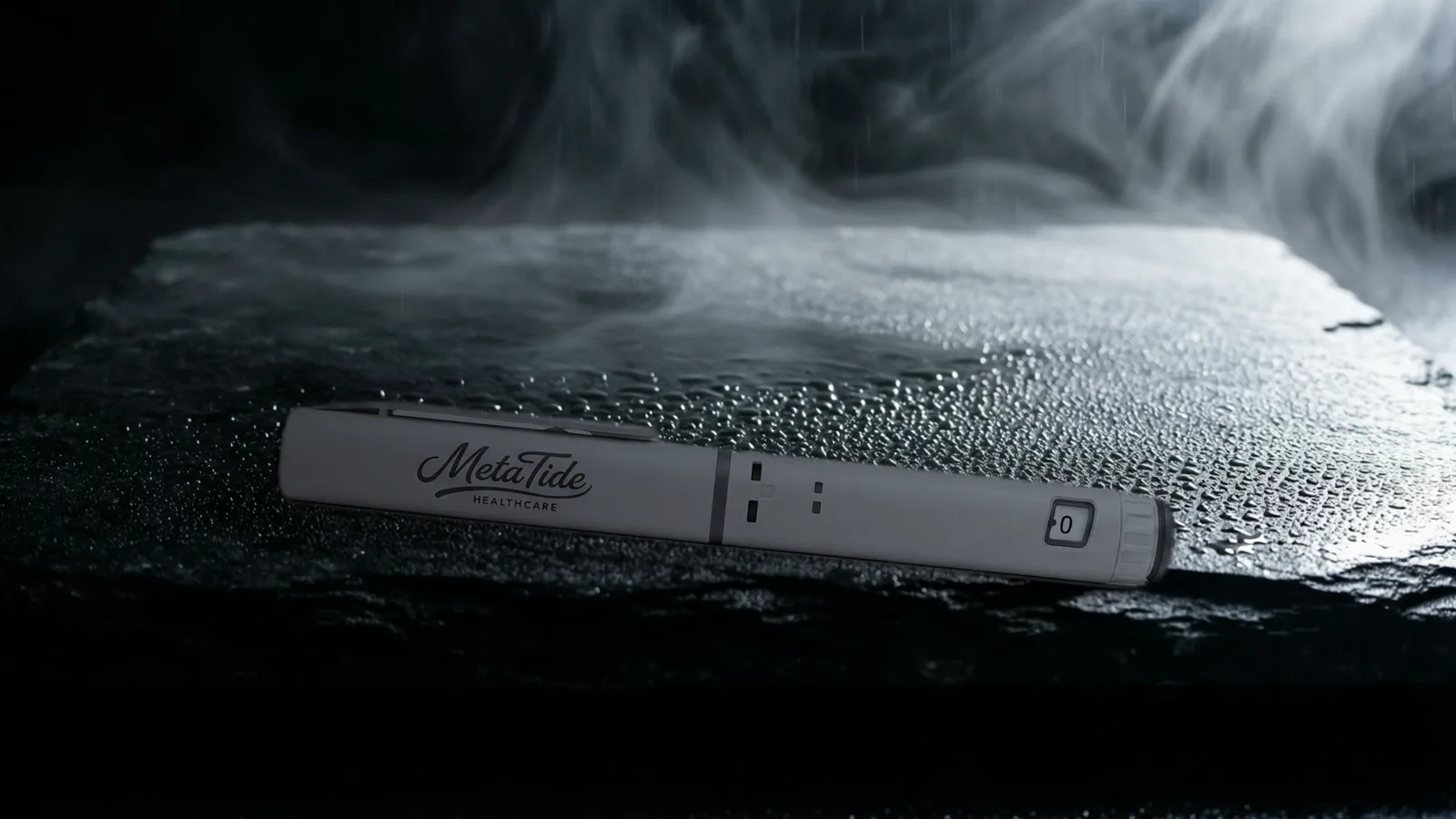
A pre-filled unit carries a single lot through a single sealed presentation with one certificate of analysis attached to it. The material that was tested is the material in the device. Nothing was combined, and nothing was reconstituted with diluent from an unrelated source after testing.
In a vial workflow, the peptide and the bacteriostatic water are separately sourced. The certificate covers the peptide. The diluent is a second input with its own provenance, and it is usually the input nobody documents.
That is not an argument that one format is safer. It is an observation that they have different traceability boundaries, and only one of them is covered end to end by a single document.
What this comes down to
A vial workflow asks the bench to supply the accuracy, the sterility and the paperwork. Done well, it works. It is simply undocumented, so nobody can later say how well it was done.
Where repeatability across aliquots matters, where the number of entries into the container matters, or where a single traceable chain from lot to certificate to device matters, the pre-filled format is doing real work rather than selling convenience. That is the case it earns, and it is the reason ReadyPep ships this format.
ReadyPep supplies pre-filled multi-dose pens for laboratory research use only, each carrying its own per-lot certificate of analysis. Nothing here describes preparation or use in humans.
Related reading
Common questions
- Where does measurement error come from when reconstituting by hand?
- It accumulates across several independent steps. The volume of diluent added, the assumption that the vial contains exactly its labelled amount, the graduation reading on the syringe, and any material left in the needle and hub all contribute. None is large by itself, and they do not cancel.
- Does a pre-filled format remove measurement error?
- It relocates it. Reconstitution happens once under controlled conditions and is verified, so the error moves from the bench into a process that is measured. The dial mechanism then handles division, which is a more repeatable operation than reading a graduation by eye.
- Why does the number of entries into a container matter?
- Each entry is an exposure to non-sterile air and a mechanical disturbance of the solution. Both accumulate. A container entered once has a materially different history from the same container entered fifteen times.