Episode 49
Parkinson's Research: Dopamine, BDNF and Peptides
Ten million people live with Parkinson's, and most dismiss the early signs. Dopamine, BDNF, and what researchers are measuring with neuroprotective peptides. Not a remedy; a support layer.
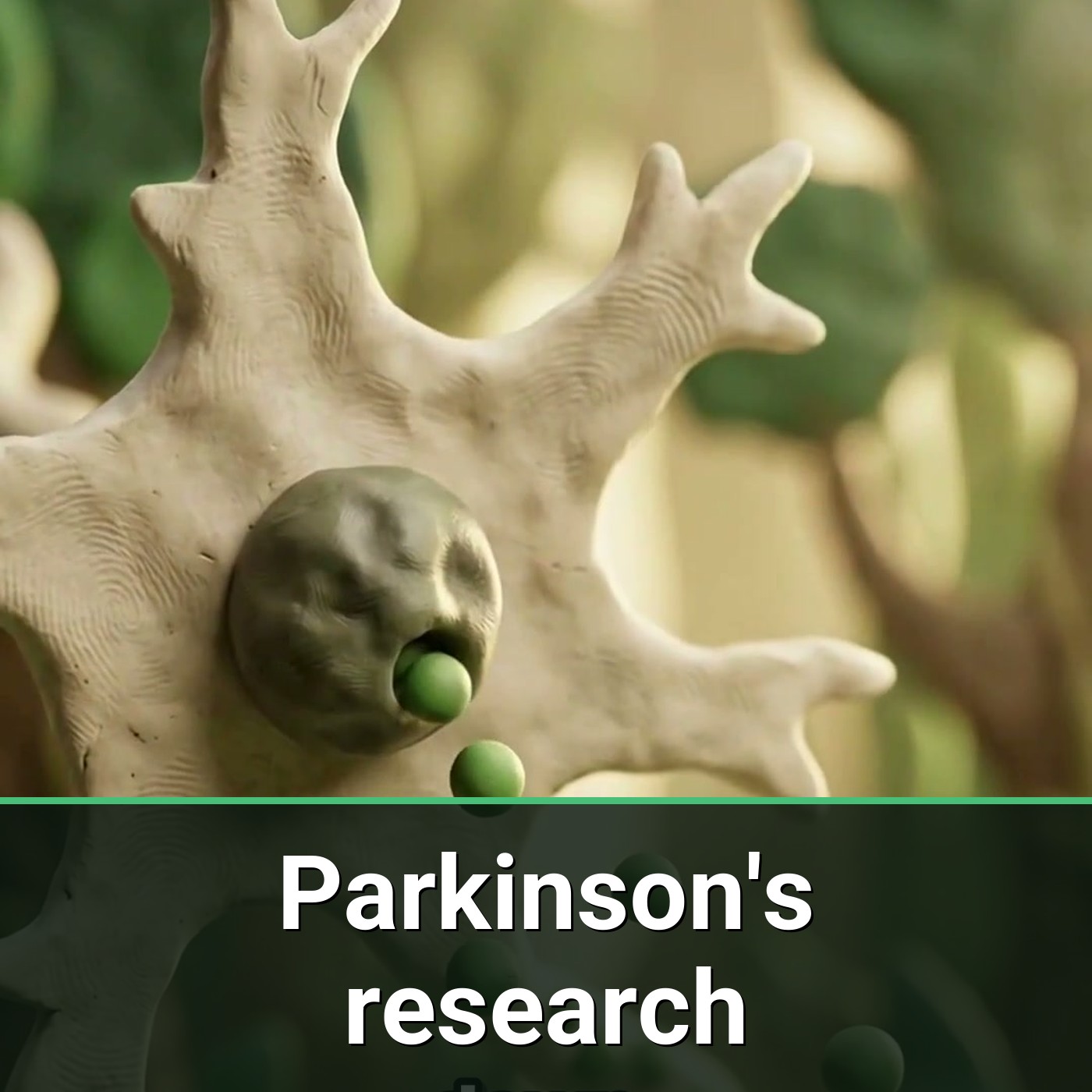
Now playing · Episode 49
Parkinson's Research: Dopamine, BDNF and Peptides
Transcript
- Parkinson's. 10 million people live with it worldwide. Most
- start by dismissing the early
- signs. Here's what it feels like. You raise a cup of coffee
- and watch your hand shake without
- permission. You sign your name and the letters get smaller
- as you go. You button your shirt and
- your fingers do not move as smoothly as they used to. You
- walk down the hallway and your feet stop
- landing where you sent them. You turn to look behind you
- and your whole body has to follow.
- You look in the mirror and your face does not show what you
- are feeling inside. Sleep gets shallow.
- Mornings get heavy. Words come out softer than you remember
- sending them. Here is what is happening
- underneath. Deep in the brain, there is a small region that
- acts like the volume knob for movement.
- Inside it, a specific group of cells make dopamine, the
- chemical that lets the brain send smooth signals
- to the body. In Parkinson's, those cells slowly stop firing
- . The volume knob gets turned down.
- Movement signals reach the body weaker. The mitochondria
- inside those cells run out of fuel.
- And the cells that should protect the neurons get tired.
- Two peptides can support this.
- Semax is a small protective peptide built for the brain. It
- crosses the blood-brain barrier
- and tells the surviving cells to stay strong by boosting BD
- NF, a growth factor that helps neurons
- hold their connections. The cells most affected by
- Parkinson's are exactly the ones Semax was designed
- to support. NAD+ is the cofactor that powers every cell.
- Levels drop with age and drop further when neurons are
- under stress. Restoring it gives the surviving cells the
- energy to keep firing. When the protective signal
- is up and the cellular fuel is back, the system gets help
- where it needs it most. The hand can feel steadier.
- The morning can feel lighter. Sleep can come back. The face
- can soften back into expression. Words can come out clearer
- .
- Not a cure. A support layer for the system's Parkinson's
Watch the film